Upcountry South Carolina - June 28-30, 2006
Wednesday, June 28
In search of cooler temperatures, we headed to the hills – to SC 11, the Cherokee Foothills National Scenic Highway. This 112-mile route winds its way through the northwest corner of the state, alongside the southernmost peaks of the Blue Ridge Mountains. Our first adventure was to visit three centuries of bridges along SC 11.
 Poinsett’s Bridge is the oldest bridge in South Carolina, built in 1820. It was one of three native stone structures on the Old State Road, a toll road from Charleston to Asheville. The Poinsett Bridge was the only bridge that featured a gothic arch. Joel Poinsett laid out the upper end of the toll road, which included the three bridges. Poinsett’s real claim to fame came later while he served as Ambassador to Mexico; he discovered a showy tropical shrub, which was named poinsettia in his honor.
Here's a portion of the old state road near the bridge and as it passes over the the top of the bridge.


Here's the downstream view of the bridge and a close-up of the arch, which contains the only stone not gathered locally.


 Next stop was Campbell’s Covered Bridge, which was built in 1909, to cross Beaverdam Creek near the town of Gowensville. It is the only original covered bridge still standing in South Carolina. Campbell’s Bridge has been restored for public viewing, but is no longer open to traffic.


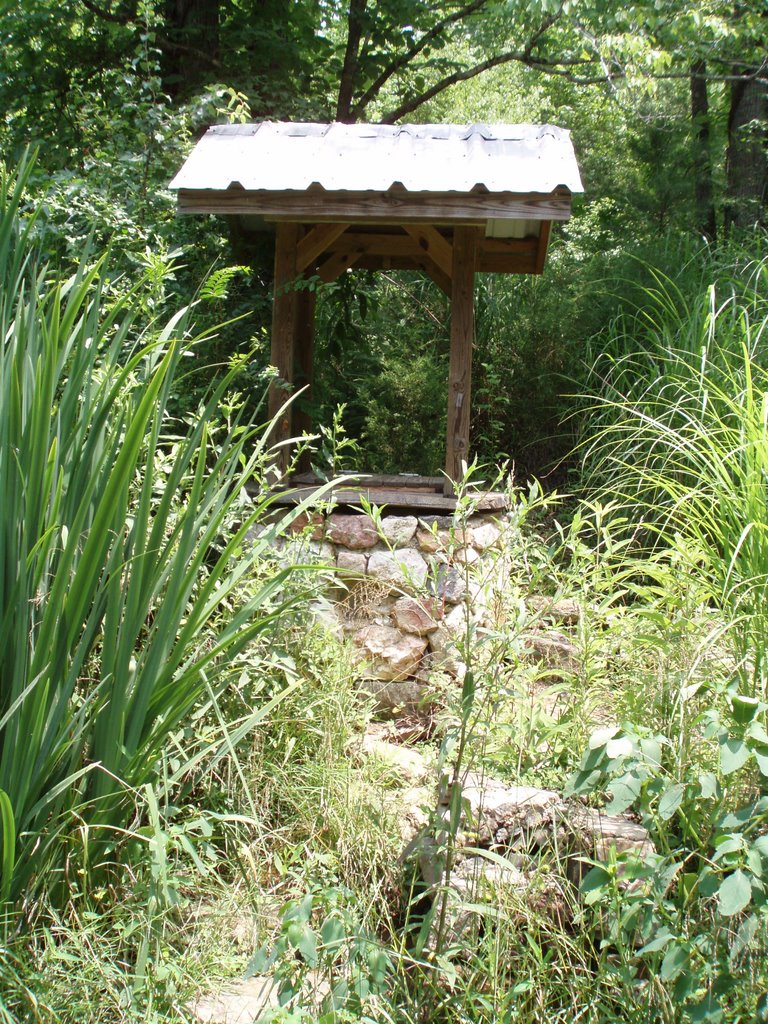
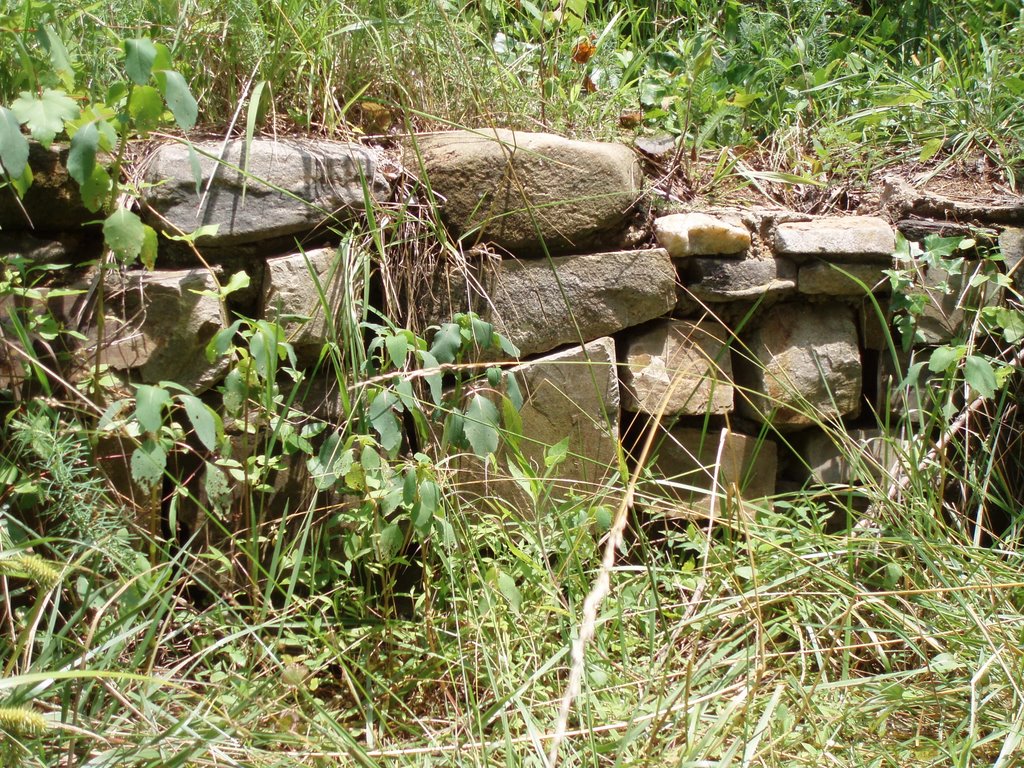
The bridge was named after Alexander Campbell, who operated a grist mill nearby. There are still signs of the old mill - stone walls and a restored well.
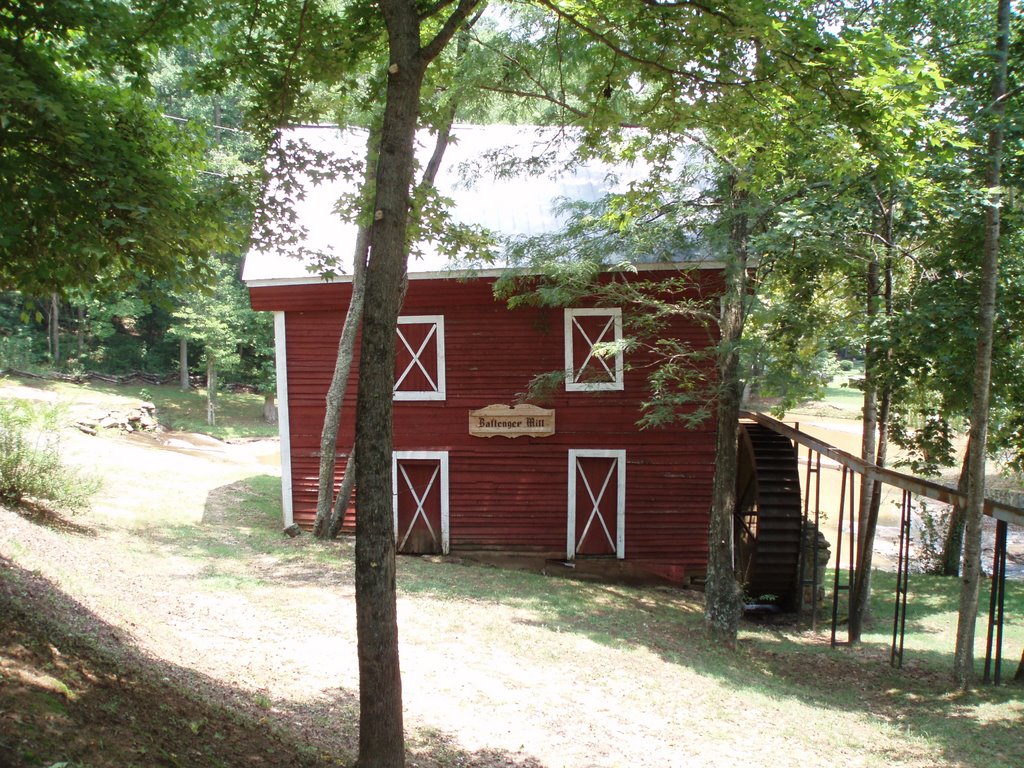
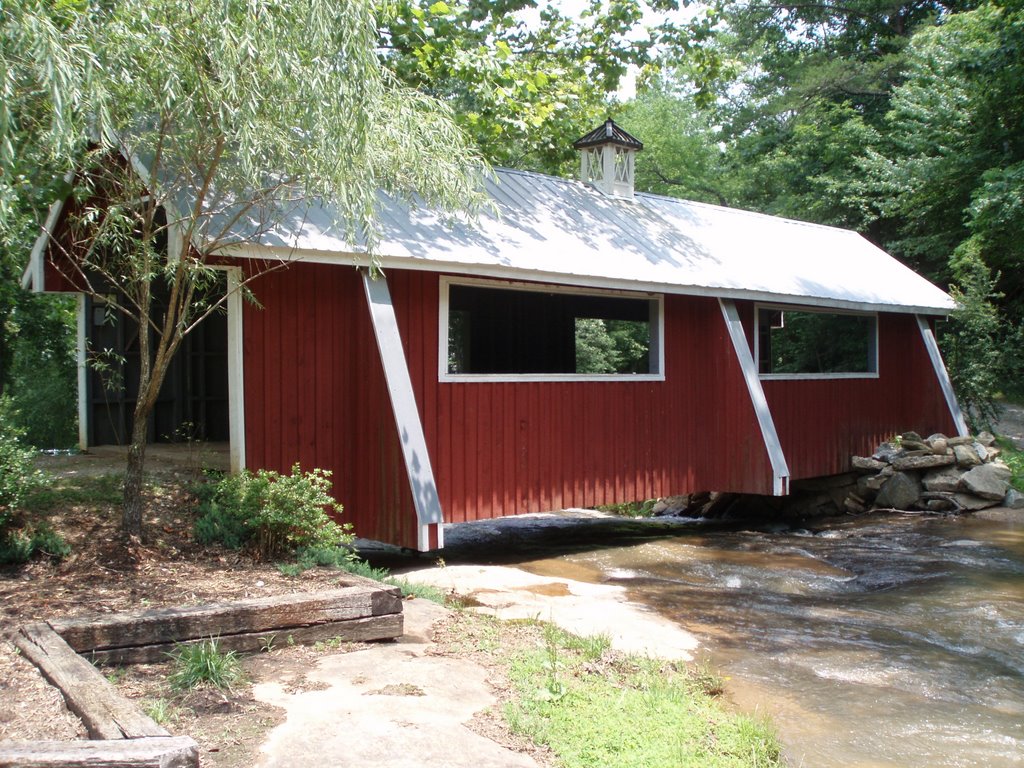 Ballenger’s Covered Bridge is a late 20th Century covered bridge across a south prong of the Middle Tyger River. It is privately owned by the family that restored Ballenger’s Mill, adjacent to the bridge. The bridge provides entrance to the family home, while through traffic on the county road still fords the river.
Last, but not least ... the Klickety-Klack Covered Bridge is an open-sided, 21st Century bridge, built by local residents as a gift to visitors to the Cherokee Foothills National Scenic Highway.
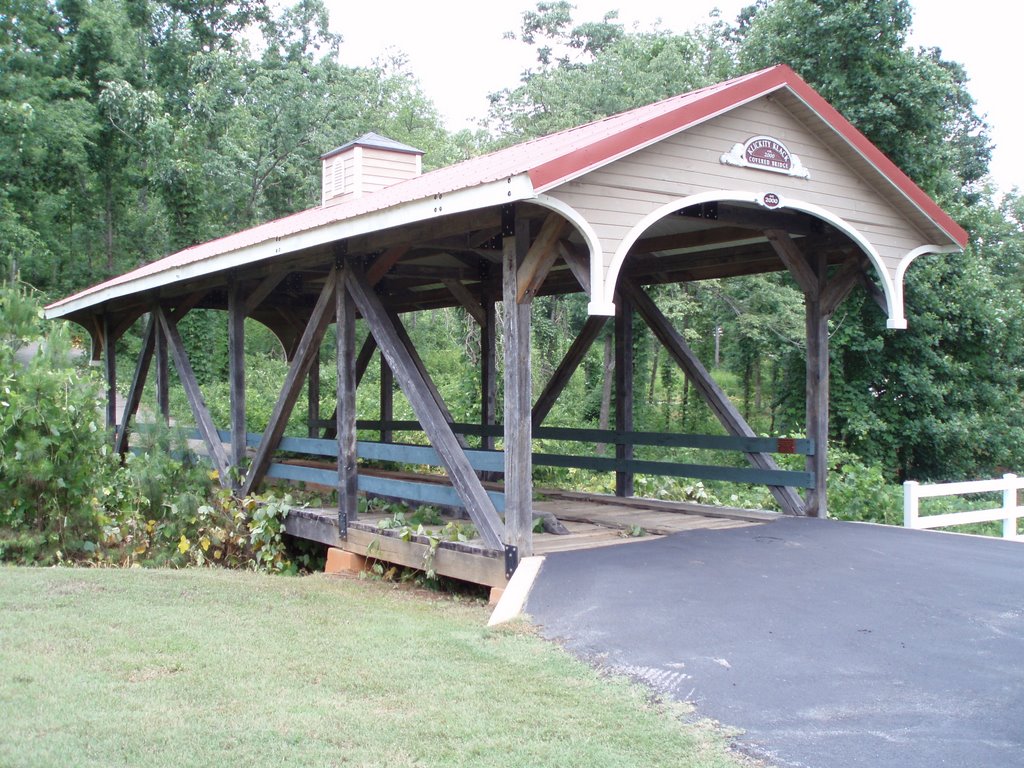

The floor timbers of the bridge are attached to support spans in a scattered pattern to provide a nostalgic “klickety-klack” of older bridges as vehicles pass over them.
Thursday, June 29
This morning, we went to Beechwood Farms, near Marietta SC, to pick some vegetables. Many of the earliest crops had been plowed under, but we loaded up on English peas, squash, cucumbers, string beans, and cabbage.


We put the veggies on ice and headed to Aunt Sue’s Country Corner for lunch. Aunt Sue’s is part of a village of shops selling candles, stuffed animals, handmade woodcrafts and religious items to flatlanders.


 We were welcomed to the restaurant by an organist on the porch; her name was Phyllis and she specialized in oldies but goodies only.
From Aunt Sue’s, we headed to Table Rock State Park. At 3,124 feet high, Table Rock dominates the skyline. Geologists suggest that Table Rock is a monadnock, a massive chunk of prehistoric granite more efficient than neighboring landscape at warding off erosion. Cherokee legend says that the spirit of a great chieftain dined on Table Rock while sitting on nearby Stool Mountain.


 We wandered around the park for the rest of the afternoon, checking out campsites for future use and admiring different views of the mountain.
And ... we saw a pileated woodpecker.
Friday, June 30
Homeward bound, we stopped in Chapin at Collins’ Blueberry Farm to load up on fresh blueberries. Payment is on the honor system - not counting all the snacks in the field.


posted by Fran and Marg at 11:42 AM
|
0 comments